Health & Safety
Sewage Backup Cleanup: Health Risks and the Right Way to Handle It
Sewage backup is category-3 black water — a serious health hazard. Learn the risks, why it's never a DIY job, and how professional sewage cleanup works.
Updated March 25, 2026 · Water Damage Restoration Salt Lake City
Dealing with water damage right now? Don't wait — mold starts in 24 hours.
Call (435) 485-9530Of all the water emergencies a homeowner can face, a sewage backup is the most hazardous. This is category-3 black water — grossly contaminated with bacteria, viruses, and parasites. It is not something to clean up with a mop and a pair of rubber gloves. Here’s what you need to know.
Why sewage backup is so dangerous
Sewage carries pathogens that cause real illness: E. coli, salmonella, hepatitis, and more. Exposure can happen through skin contact, contaminated surfaces, or breathing aerosolized particles. This is why sewage is classified as the most severe of the three categories of water damage.
The danger isn’t only the water itself — it’s everything the water touches. Porous materials like carpet, drywall, and padding absorb the contamination and usually can’t be salvaged.
What causes sewage backups
- Clogs in your main sewer line (grease, roots, flushed debris)
- City main surcharge during heavy rain or snowmelt, pushing sewage back up your drains
- Tree roots infiltrating and blocking older sewer lines — common in established Murray and Salt Lake City neighborhoods
- Sump or sewage-ejector pump failure in basements
A flooded basement that comes up through floor drains should always be treated as potentially contaminated until proven otherwise.
Sewage backup? Keep everyone away from it.
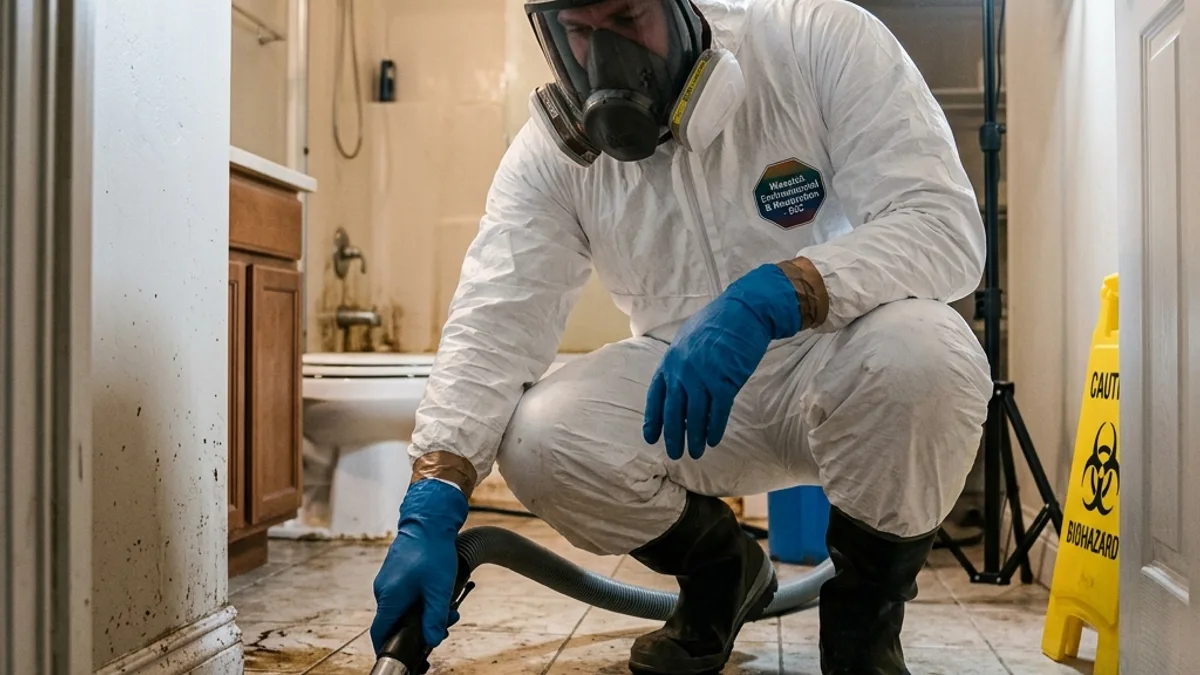
This is a biohazard. Our crews arrive in full PPE to clean, disinfect, and make your home safe.
What to do (and not do) right now
Do:
- Keep people and pets away from the affected area
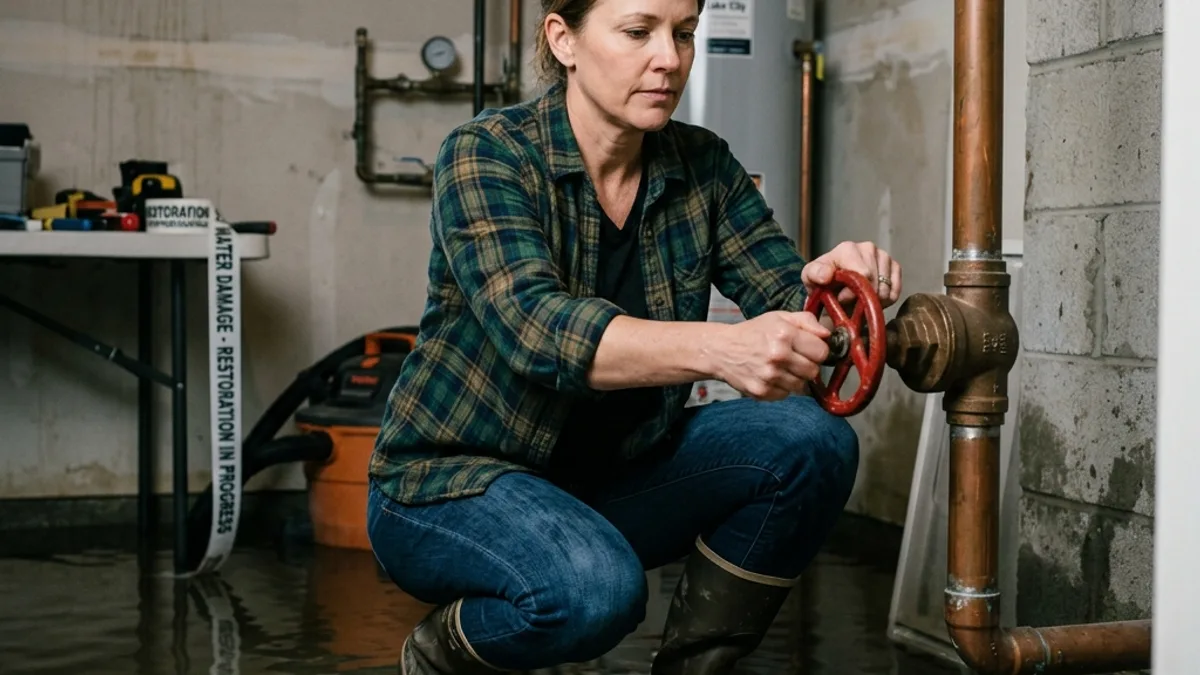
- Shut off the water if a fixture is overflowing
- Turn off power to the area if safe
- Avoid using plumbing that drains toward the backup
- Document for your insurance claim
Don’t:
- Don’t wade into or touch the water
- Don’t run fans (this aerosolizes contaminants)
- Don’t attempt to clean it yourself
- Don’t flush or run water that adds to the backup
The general first-response steps still apply, but with sewage the rule is simple: stay out and call professionals.
How professional sewage cleanup works
- Safety setup — technicians don full PPE and establish containment.
- Extraction of contaminated water with specialized equipment.
- Removal and disposal of porous materials that absorbed sewage.
- Cleaning and disinfection of all surfaces with EPA-registered antimicrobials.
- Drying the structure via the structural drying process.
- Deodorization and clearance to confirm the space is safe and habitable.
- Mold prevention, since contamination accelerates mold growth.
Does insurance cover sewage backup?
Standard homeowners policies often exclude sewer backup unless you carry a specific sewer/water backup endorsement. It’s an inexpensive add-on that’s well worth it. Check your policy now — our insurance claim guide explains how coverage and documentation work, and our cost guide shows why category-3 jobs sit at the high end of the price range.
The bottom line
A sewage backup is a biohazard, not a cleaning chore. The safe, correct response is to keep everyone away and bring in a certified crew with the equipment and PPE to remove the contamination, disinfect thoroughly, and restore your home. We provide 24/7 emergency sewage cleanup across Salt Lake City and the entire valley.
Need Help? Request a Free Assessment
Tell us what happened and a licensed Salt Lake City restoration specialist will get right back to you.