Home Guide
Ceiling Water Damage: Signs, Causes & When to Call a Pro
Brown stains, sagging, peeling paint — ceiling water damage is a warning sign you shouldn't ignore. Learn the causes, the risks, and when to call a professional.
Updated April 3, 2026 · Water Damage Restoration Salt Lake City
Dealing with water damage right now? Don't wait — mold starts in 24 hours.
Call (435) 485-9530A water stain on the ceiling is your home telling you something is leaking above it. It’s easy to paint over and forget — but ceiling water damage almost always means active or recurring moisture in a place you can’t see, and ignoring it can end with a collapsed ceiling.
The warning signs
Catch ceiling water damage early by watching for:
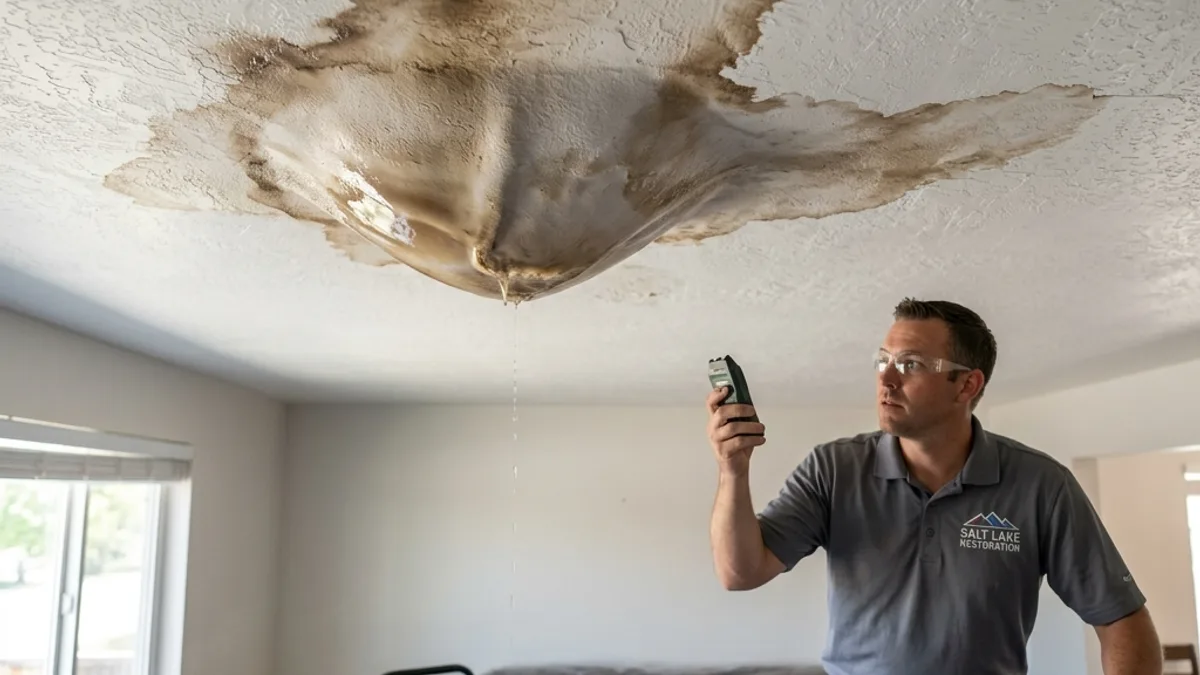
- Brown or yellow stains — the classic ring-shaped watermark
- Sagging or bulging drywall (a serious sign — water is pooling above)
- Peeling or bubbling paint
- Cracks that appear or widen
- Active dripping or damp spots
- A musty smell, which often means mold has started
A bulging ceiling holding water is a safety hazard. Don’t stand under it, and don’t poke it without a plan — see the safety notes in what to do after water damage.
Common causes
Ceiling damage comes from whatever is directly above:
- Roof leaks — missing shingles, failed flashing, ice dams in winter
- Plumbing leaks from an upstairs bathroom or a burst pipe in the ceiling cavity
- HVAC condensation from attic units or ductwork
- Overflowing fixtures on the floor above
Identifying the source is essential — restoring the ceiling without fixing the cause just means you’ll be doing it again.
Ceiling stain spreading or sagging?
That's hidden water at work. We find the source, dry it out, and restore the ceiling safely.
Why you can’t just paint over it
Painting a water stain hides the symptom while the problem continues. Behind that stain, moisture may be:
- Soaking the drywall until it loses structural integrity
- Saturating insulation (which then stops insulating)
- Growing mold in the dark, humid cavity
- Tracking along joists to new areas
This hidden spread is exactly the kind of thing covered in our guide to signs of hidden water damage. The real fix requires finding the moisture with meters and drying the cavity — not a coat of stain-blocking primer.
How professionals handle ceiling water damage
- Locate the source with moisture meters and infrared cameras.
- Stop the leak (or coordinate the plumbing/roof repair).
- Assess the drywall — saturated, sagging sections are removed.
- Dry the cavity using the structural drying process.
- Check for mold and remediate if present.
- Restore the drywall, texture, and paint to match.
When to call a pro vs. DIY
A tiny, one-time stain from a known and fixed leak might be a homeowner patch job. But call a professional when you see sagging, active dripping, a spreading stain, or any musty smell — these mean ongoing moisture and possible structural or mold issues. The cost of professional repair is far lower than replacing a collapsed ceiling and remediating mold, and it’s often covered when the cause is sudden — see our insurance claim guide.
The bottom line
Ceiling water damage is never just cosmetic. It’s a visible sign of hidden moisture that will keep causing damage until the source is fixed and the cavity is dried. If your ceiling is stained, sagging, or smells musty, get it looked at. We help homeowners across Salt Lake City and the valley find the source and restore it right.
Need Help? Request a Free Assessment
Tell us what happened and a licensed Salt Lake City restoration specialist will get right back to you.